Process validation guide

UHT Temperature, Holding Time and Process Validation

A temperature number is not a scheduled process. Holding time depends on actual flow, product behavior, equipment geometry, instrumentation, and the validated sterile boundary.

Use an official or appropriately qualified process authority to establish the commercial process. Supplier data can support equipment design and verification but does not replace that authority.

Last updated .

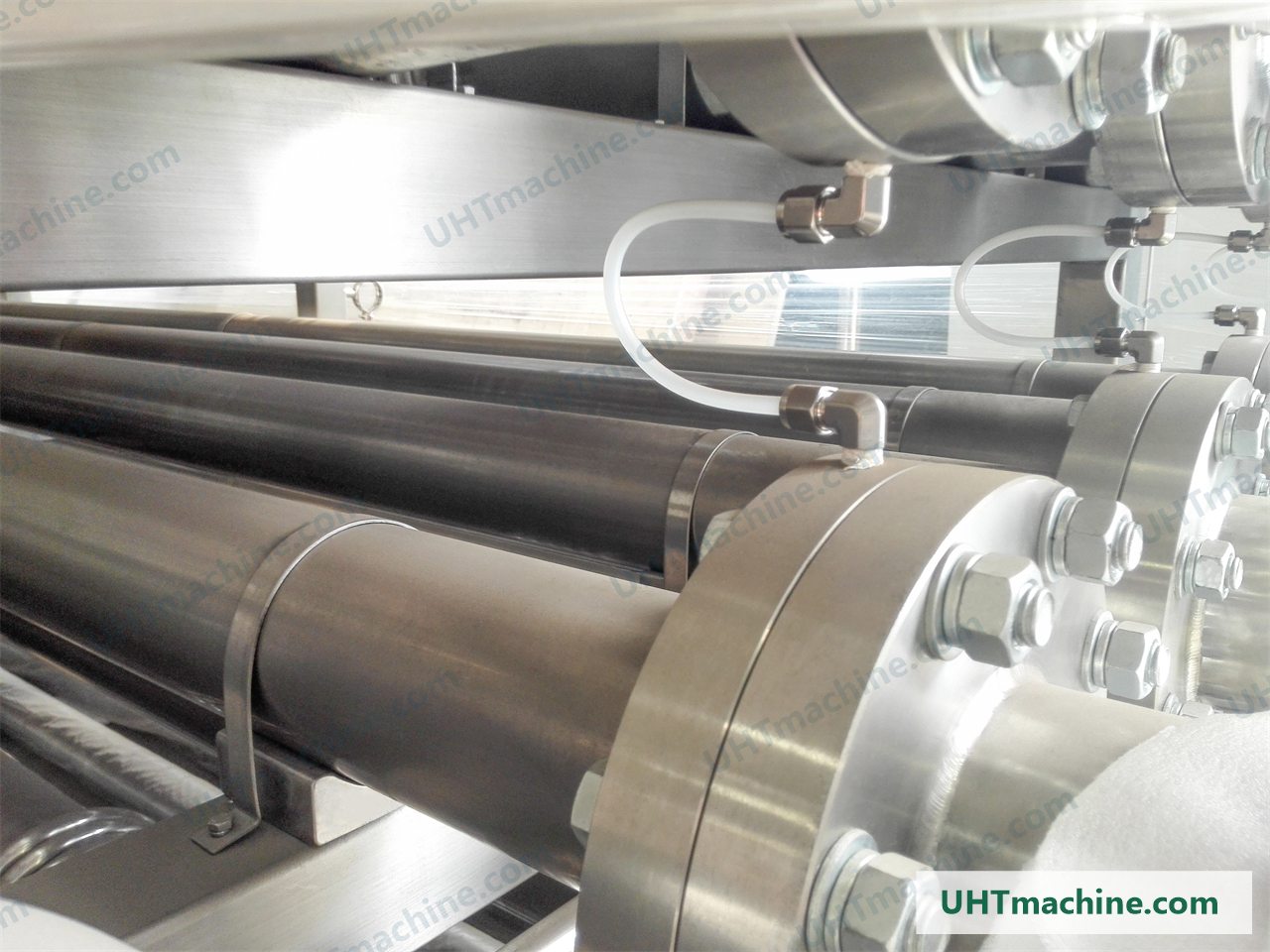
UHT process pipework used to explain flow and validation context
Hardware context only; this image does not show an approved process, measured residence-time result, or validation outcome.

Scheduled-process boundary

Why there is no universal UHT temperature and time

Product factors

Composition, pH, initial contamination assumptions, particles, viscosity, heat transfer, fouling, and quality targets can change the required process. A value used for milk is not automatically suitable for juice, plant-based drinks, sauces, or another liquid food.

Equipment factors

Actual flow, pump behavior, heat exchanger, holding-section geometry, pressure profile, cooling, instrument location, and control response determine what the product experiences. Nominal nameplate capacity is not residence-time evidence.

Package and market factors

The scheduled process must account for the downstream sterile zone, aseptic tank or filler, package system, operating procedure, target shelf life, and applicable authority. A generic web table cannot approve a commercial process.

Holding-time evidence

Separate nominal holding time from actual residence time

A useful design package shows how the minimum product exposure is protected throughout the approved operating envelope.

Flow basisDefine the verified flow range, meter method, accuracy, calibration, pump and control behavior, allowed turndown, and response to disturbances.
Holding geometryDocument internal dimensions, usable length, fittings, slope, insulation, expansion, drainage, and any configuration change that can alter residence time.
Product behaviorEvaluate viscosity at process temperature, flow regime, particles, slip or channeling risk, and residence-time distribution using an accepted method for the product and system.
Critical instrumentsFreeze indicating and recording temperature devices, flow measurement, pressure points, sensor locations, calibration intervals, alarm limits, data records, and access control.
Process authorityIdentify who establishes and approves the scheduled process, which data the equipment supplier provides, and which evidence the operator must retain.

Validation scope

Follow the process from heating through the downstream sterile boundary

Validation should address normal operation and credible deviations, not only a stable temperature reading during one test.

  1. 01Freeze the process basis

    Identify product, package, critical factors, operating envelope, responsible authority, and approved acceptance criteria.

  2. 02Verify instruments and flow

    Check calibration, range, accuracy, installation, data capture, actual flow, holding-section evidence, and traceable test records.

  3. 03Challenge controls and diversion

    Test low temperature, unstable flow, pressure loss, startup, restart, shutdown, interlocks, segregation, and documented deviation response.

  4. 04Verify the sterile zone

    Extend the review downstream through coolers, valves, piping, aseptic buffer, filler, package system, and their sterilization preparation.

  5. 05Confirm operating records

    Define batch or run identity, critical trend data, alarms, interventions, release decisions, deviations, maintenance, calibration, and retention responsibilities.

  6. 06Control later changes

    Specify when formula, capacity, holding sections, instruments, controls, package, or sterile-zone changes trigger review or revalidation.

Evidence request

Validation documents and tests to define in the RFQ

Buyer questions

UHT validation questions that a generic setpoint cannot answer

What temperature and holding time should a UHT process use?

Temperature and holding time must be established for the actual product, equipment, package, and destination market by the appropriate process authority. A generic setpoint is not a commercial process specification.

How is UHT holding time determined?

It depends on validated product flow through the holding section, equipment geometry, product behavior, operating limits, and residence-time evidence—not only on tube volume divided by nominal capacity.

Can an equipment supplier establish the scheduled process?

A supplier can provide equipment and control data and may support trials, but the contract should identify the official or qualified process authority responsible for establishing and approving the process.

Does a pilot UHT trial replace production validation?

No. Pilot work can narrow the process window and equipment choice, but production-scale flow, controls, sterile zones, packaging, and operating procedures still require their own validation.

What happens when temperature or flow leaves the approved range?

The system should follow the approved diversion, shutdown, segregation, re-sterilization, evaluation, and recordkeeping procedure defined for that process and jurisdiction.